
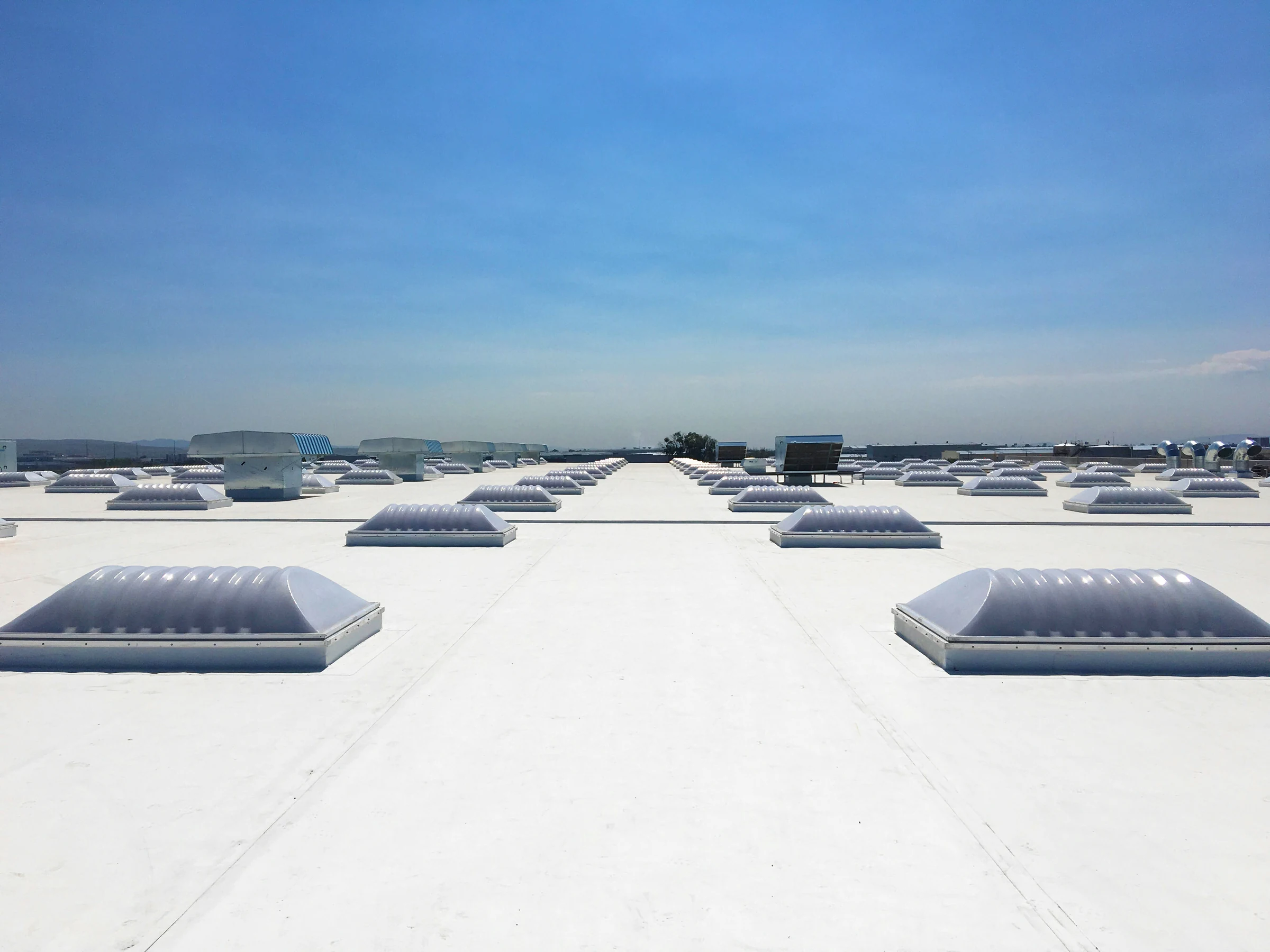
Holcim Elevate Membrane Systems, Formerly Firestone
Holcim Elevate is the rebranded commercial roofing division formerly known as Firestone Building Products, renamed after building-materials company Holcim acquired the business. The membrane technology and product lines carried over from Firestone, so a lot of the track record building owners associate with Firestone TPO and EPDM applies directly to the current Elevate product line.
From Firestone to Elevate
Owners with an older Firestone-branded roof sometimes ask what the rebrand means for their existing warranty or future service. The underlying manufacturer and product lines are the same company under new ownership and a new name, and existing Firestone warranties remain manufacturer obligations that transferred with the brand change.
For new projects, Elevate's current catalog covers TPO, EPDM, PVC, and modified bitumen membrane, which gives us the same range of single-ply and multi-ply options to match against a specific Eugene roof's exposure and traffic.
Membrane Range and System Fit
Because Elevate produces membrane across all the major single-ply categories, the manufacturer decision on an Elevate-specified job usually comes down to picking the right membrane type; TPO for welded-seam wet-climate performance, EPDM for a simpler field, PVC where chemical resistance matters; rather than the manufacturer name driving the choice.
We treat an Elevate spec the same way we treat any manufacturer's: matching product to roof condition first, brand second.
Warranty Continuity and Documentation
Manufacturer warranties on membrane roofing are tied to product line, installation compliance, and documentation regardless of corporate ownership changes. We keep detailed records of product, thickness, and install date on any Elevate project so a future ownership transfer or warranty claim isn't held up by missing paperwork.
On buildings with an existing older Firestone roof coming up for evaluation, we check what warranty coverage, if any, is still active before recommending a recover or replacement scope.
- Rebranded from Firestone Building Products after Holcim's acquisition of the business
- Product lines and membrane technology carried over from the Firestone catalog
- Manufactures TPO, EPDM, PVC, and modified bitumen membrane systems
- Existing Firestone-branded warranties remain manufacturer obligations
- TPO and PVC lines use heat-welded seams for wet-climate seam durability
- Selected based on membrane fit for the roof, alongside other established manufacturers
Performance in Willamette Valley Conditions
Elevate's TPO and PVC lines use heat-welded seams, the seam method we favor for roofs that stay wet for most of the year, since the weld doesn't rely on adhesive bond strength the way a taped EPDM seam does. Elevate's EPDM remains a reasonable option on simpler roof fields with a solid drainage history.
Ponding tolerance, moss exposure under tree canopy near campus and older commercial blocks, and cold-weather behavior during the region's occasional ice events depend on the specific membrane chosen, the same considerations that apply across any manufacturer's comparable product.
Where Elevate Fits Among the Options We Compare
We bring up Elevate alongside other established manufacturers when its specific product line is a strong fit for the roof's condition and the owner's budget. It's a credible, longstanding manufacturer under new ownership, not a different or unproven company.
We've serviced and inspected Firestone-branded roofs across the region for years, and that history carries forward directly into how we evaluate and recommend Elevate's current product line on new projects. That includes knowing which older Firestone product generations tend to need closer seam inspection and which have held up with minimal issues, knowledge that carries over directly to how we set maintenance schedules on newer Elevate installations.
Evaluating an Existing Firestone Roof for Recover
When we're called to evaluate a building with an aging Firestone-branded roof, the first questions are practical: is the membrane still sound, is the insulation dry, and what if any warranty coverage is still active. Those answers determine whether the right move is a recoat, a recover with new Elevate membrane, or a full tear-off.
We don't assume an older Firestone roof needs replacement just because the brand has changed names. Plenty of these roofs have years of service life left, and we say so when the inspection supports it rather than pushing a bigger scope than the roof needs. Elevate also produces coating products for recoat work, which we consider alongside other manufacturers' coatings when an existing Elevate or legacy Firestone membrane is a recoat candidate rather than a full replacement. Compatibility with the existing membrane chemistry drives that decision more than brand loyalty. On a recoat versus recover decision specifically, we still start with a moisture scan of the existing roof, since a coating over trapped moisture only delays the eventual tear-off rather than preventing it.
Questions on Holcim Elevate Roofing Systems
Is Holcim Elevate the same company as Firestone Building Products?
It's the same commercial roofing business under new ownership after Holcim's acquisition, rebranded as Elevate. Product lines and technology carried over from Firestone.
Does an old Firestone roof warranty still apply after the rebrand?
Existing warranties remain manufacturer obligations tied to the product and documented installation, regardless of the corporate name change. We check active coverage before recommending new work.
What membrane types does Elevate manufacture?
TPO, EPDM, PVC, and modified bitumen, covering both single-ply and multi-ply system options.
Does Elevate TPO handle constant regional rain well?
It uses the same heat-welded seam approach we look for in wet-climate performance across manufacturers, forming a fused bond rather than a taped seam.
Do you specify Elevate on every project?
No. We compare it against other established manufacturers based on which specific membrane line best fits the roof's drainage, traffic, and exposure.