
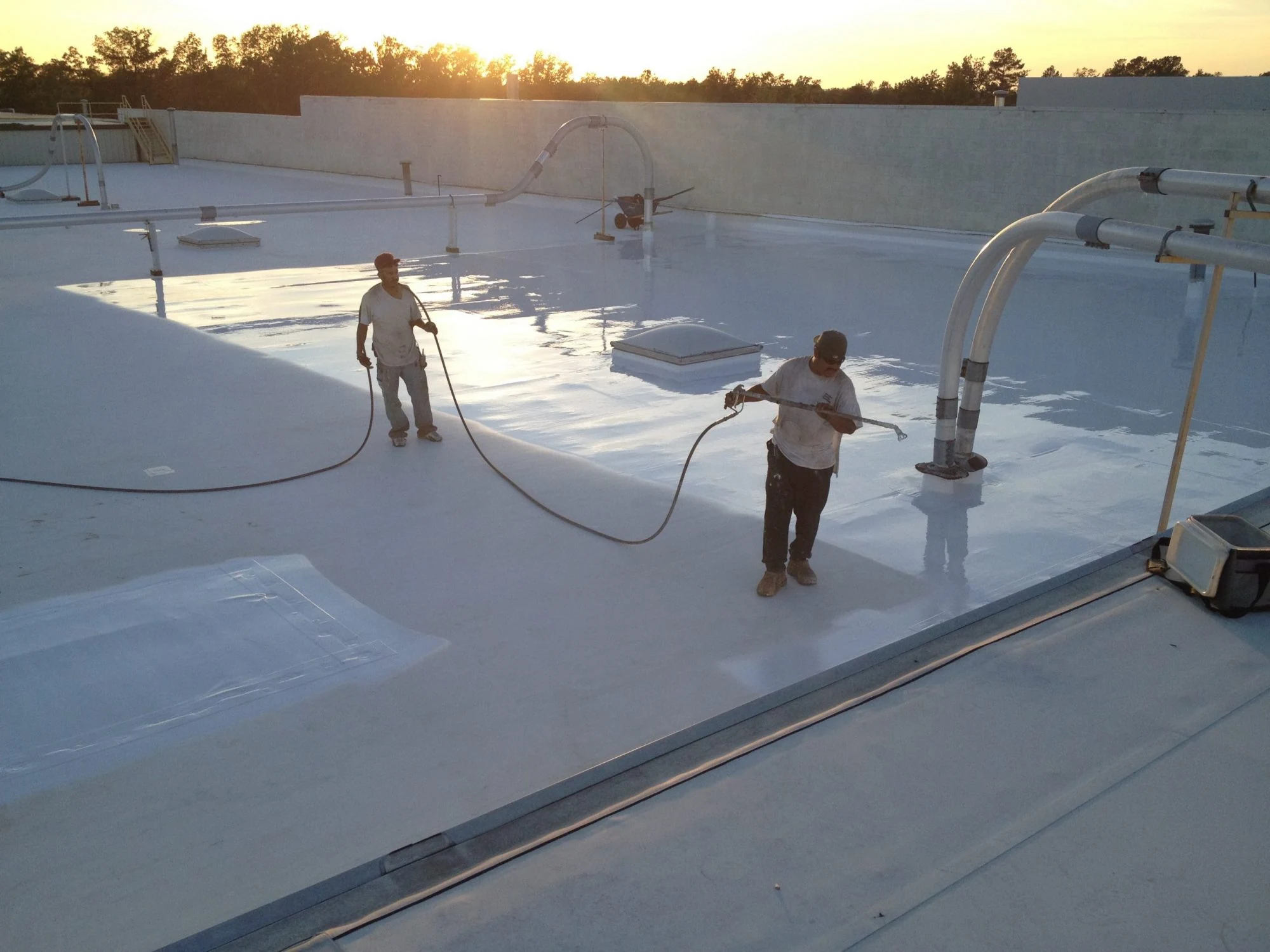
Acrylic Coatings for UV and Algae Control on Sloped Roofs
A coating recommendation starts with adhesion, moisture, drainage, membrane condition, detail preparation, and warranty eligibility,not every existing roof is a restoration candidate. Acrylic coating is the more economical option between the two reflective coating types we apply, and it's a strong fit for roofs that drain well and don't have ponding areas. Standing seam and R-panel metal roofs, along with the sloped sections of built-up and modified bitumen fields, are where we specify acrylic most often around Eugene.
Why Drainage Determines Whether Acrylic Is Right
Acrylic coating performs well under normal wet-dry cycling but degrades faster than silicone when water sits on it repeatedly for extended periods. On a roof with genuine positive slope and no low spots that hold water after a storm, that limitation doesn't matter, because the coating never sees sustained ponding in the first place. On a flat roof with any drainage deficiency, acrylic is the wrong choice and we specify silicone instead.
We map drainage patterns during inspection before recommending either coating type, since the wrong call here means a coating job that underperforms and needs earlier reapplication than it should.
Algae Resistance Matters More Here Than Most Markets
Algae and moss growth on roof surfaces is a near-constant condition management issue in this climate given how much of the year the roof stays damp. Most quality acrylic coating formulations include algae-resistant additives specifically to slow biological growth on the coated surface, which is a meaningful factor here compared to drier regions where that additive matters less. A coating without algae resistance can develop visible streaking and growth within a couple of wet seasons in this market, undermining both appearance and the reflectivity the coating was applied to achieve.
We specify algae-resistant formulations as standard on any coating project in this region rather than treating it as an upgrade, given how consistently biological growth shows up on uncoated and standard-coated surfaces here.
Where Acrylic Coating Fits Around the Valley
Standing seam and R-panel metal roofs on ag, industrial, and warehouse buildings with faded or chalking factory finish are common acrylic candidates, since these roofs typically drain well by design and the coating restores both appearance and UV protection economically. Sloped built-up roof sections and the pitched portions of older mixed-slope commercial buildings near downtown also work well with acrylic, provided the drainage there is confirmed adequate.
We steer away from acrylic on any flat membrane roof section with known ponding history, recommending silicone for those areas even on a building where the sloped sections get acrylic, which sometimes means a single roof gets two different coating systems applied to different zones based on drainage.
Cost Advantage and Where It Comes From
Acrylic costs meaningfully less than silicone, largely because the raw material and application process are simpler. For a building with confirmed good drainage across the field, that cost difference is real savings without a performance trade-off, since acrylic's limitation is specifically about ponding tolerance, not general durability. We're direct with building owners about which coating fits their specific roof rather than defaulting to the cheaper option everywhere.
Application Timing and Cure Conditions
Like any coating, acrylic needs a dry substrate and a rain-free window to cure, which limits realistic application timing to the drier stretch of the year, generally summer into early fall when the valley gets sustained dry weather. Applying acrylic during the wet season risks incomplete cure and early coating failure, so we schedule around the seasonal window rather than rushing a job into a wet forecast.
Acrylic Coating Project Checklist
- Drainage assessment to confirm no ponding areas before specifying acrylic
- Surface cleaning and preparation, removing existing moss and algae
- Rust treatment and spot repair on metal roof candidates
- Seam and fastener check prior to coating application
- Algae-resistant base and topcoat application at proper mil thickness
- Post-application walk to confirm even coverage and adhesion
Maintenance After Coating
A coated roof still needs periodic inspection, particularly checking for early algae regrowth at shaded edges and confirming coating thickness hasn't worn thin at foot-traffic areas near rooftop equipment. Recoating on a planned interval, before the existing coat has fully worn through, keeps the underlying roof protected without letting UV and moisture exposure reach the substrate directly.
Common Acrylic Coating Questions
How do I know if my roof should get acrylic or silicone coating?
It comes down to drainage. If the roof has any area that holds standing water after rain, silicone is the right choice. If it drains fully and consistently, acrylic performs well at a lower cost.
Does acrylic coating actually slow down algae growth here?
A quality algae-resistant acrylic formulation does slow growth meaningfully compared to an uncoated or standard-formula surface, though it doesn't eliminate the need for periodic cleaning in a climate this consistently wet.
Can acrylic coating be applied to a metal roof with some rust already present?
Localized rust needs to be treated and the surface properly prepared before coating. Coating over active, untreated corrosion just traps the problem under the new surface.
How often does an acrylic-coated roof need to be recoated?
It depends on sun exposure, traffic, and how well the roof drains, but a properly applied coating on a well-draining roof typically holds up for a solid number of years before a maintenance recoat is needed.
Is acrylic coating a permanent fix, or does the roof still need replacement eventually?
Coating extends service life but isn't permanent. Eventually the underlying membrane or metal reaches the end of its structural life regardless of coating, and we monitor for that point during routine inspections.