
Modified Bitumen Roofing for Multi-Layer Redundancy in Wet Winters
Modified bitumen shows up a lot on older industrial buildings around Eugene, particularly structures with wood-frame or wood-truss construction near the valley's legacy mill sites. Multi-ply redundancy has real value on a roof that spends most of the year wet, and it's part of why this system has stuck around even as single-ply membranes have taken over new construction.
Why Multiple Plies Matter in a Climate Without a Real Dry Season
A modified bitumen system typically goes down in two or more plies, a base sheet and a cap sheet, sometimes with an additional ply depending on the assembly. That layering means a small puncture or seam gap in the top layer doesn't automatically create an active leak, because the layer beneath is still doing its job. On a single-ply membrane, a comparable breach is a more direct path to the deck.
That redundancy is worth more here than in a drier climate, because a leak that starts in October has months to keep working before a dry stretch gives anyone a real chance to find and fix it without fighting active rain. The extra ply buys time.
Torch-Applied Versus Self-Adhered: The Wood-Deck Question
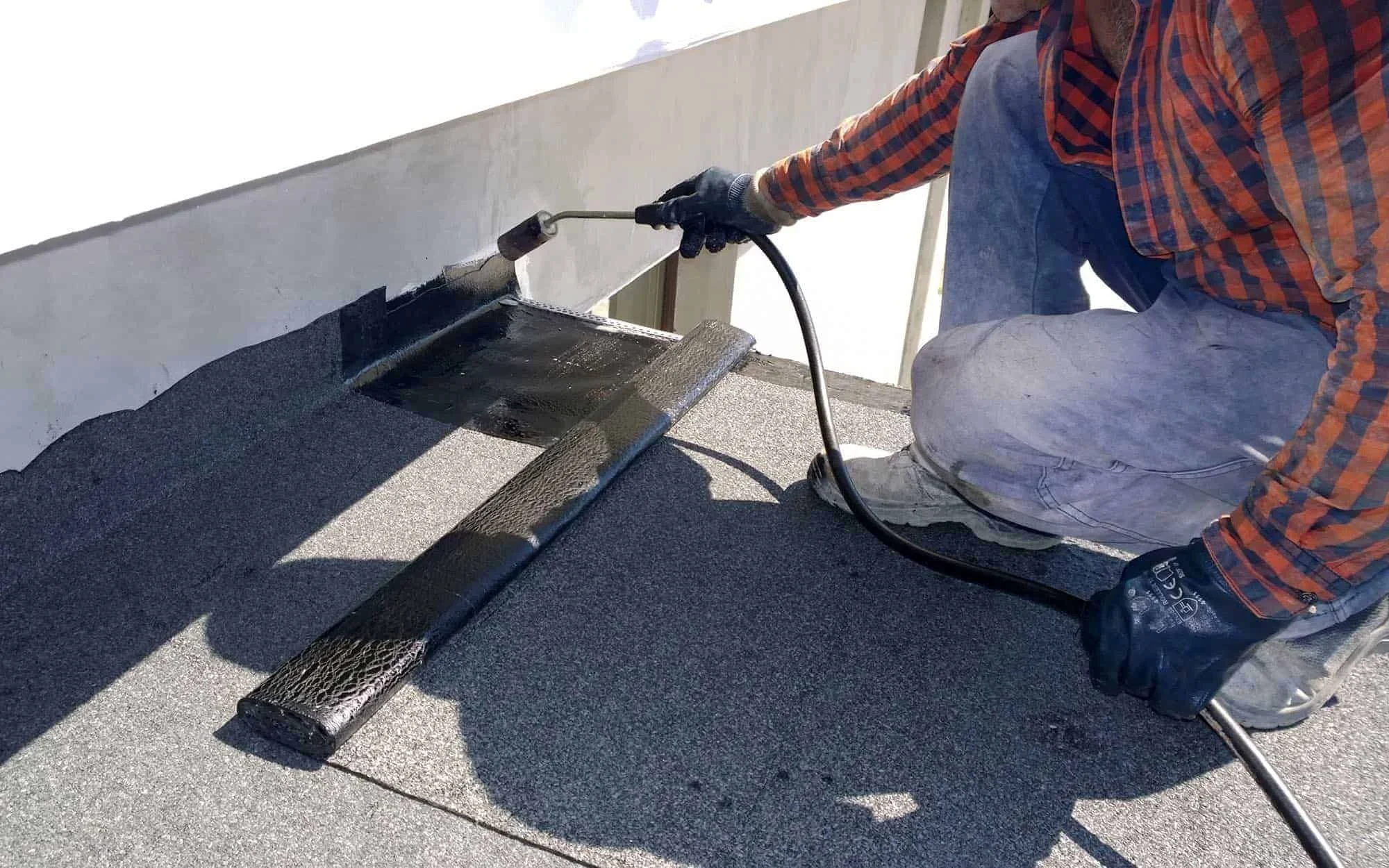
Traditional modified bitumen installation uses a torch to melt the asphalt and bond the plies, which works well but carries fire risk on buildings with wood decking, wood-truss framing, or nearby combustible storage, all of which are common on older manufacturing buildings tied to the area's wood-products history. On those buildings, we generally recommend self-adhered modified bitumen instead, which uses a peel-and-stick application that bonds without an open flame.
Self-adhered systems cost somewhat more in material but eliminate the fire watch requirements and risk that come with torch application near wood structural elements, which is a straightforward trade-off on the buildings where it applies.
Granulated Cap Sheets and Moss Accumulation
Most modified bitumen cap sheets have a granulated surface for UV protection and traffic resistance, and that texture is exactly the kind of surface moss and algae colonize easily, more so than a smooth membrane. On older cap sheets we inspect, we often find moss established in the granule layer at low points and roof edges, holding moisture against the surface longer than an open field would see.
Granule loss is the other thing we watch for, since a cap sheet that's shedding granules has lost UV protection at that spot and is aging faster than the rest of the field. We map granule loss patterns during inspections to flag areas needing attention before they become active leaks.
Where This System Fits Best Around the Valley
Modified bitumen suits older industrial and manufacturing buildings with wood-frame construction, buildings needing the redundancy of a multi-ply system over a history of leaks, and roofs where a torch-free self-adhered install is the safer path given nearby combustible materials or active production below. We also use it on smaller roof sections and additions where matching an existing modified bitumen field makes more sense than transitioning to a different membrane type at the tie-in.
It's a less common choice for new large-format warehouse construction now, where TPO or PVC's heat-welded seams and lower installed weight tend to win out, but for the buildings it fits, modified bitumen still performs well.
Modified Bitumen Service Checklist
- Granule loss mapping across the cap sheet field
- Moss and debris removal from granulated surfaces at low points
- Seam and lap inspection at ply overlaps
- Flashing check at parapets, curbs, and wall transitions
- Drain and scupper clearing before wet season
- Blister and bubble inspection where trapped moisture may be present
Repair Approach on an Aging Modified Bitumen Roof
Localized repairs are usually the right call before recommending a full recover. A base sheet that's still sound under a worn cap sheet often just needs a new cap layer rather than full tear-off, which keeps costs down for building owners managing an older roof on a maintenance budget. We reserve full replacement recommendations for roofs where the base sheet itself has taken on moisture or seam failure is widespread across the field.
Deciding between a cap sheet overlay and full replacement usually comes down to what the core samples show at the base ply. If the base sheet is dry and adhered well to the deck, a new cap layer restores UV protection and surface integrity for a fraction of tear-off cost. If moisture has already tracked into the base ply, patching over it just delays a bigger repair and lets the deck keep absorbing water underneath a roof that looks fine from above.
Common Modified Bitumen Questions
Is torch-applied modified bitumen safe on an occupied building?
It can be, with proper fire watch protocols, but on wood-frame structures or buildings with combustible storage nearby, we generally recommend self-adhered systems instead to remove that risk entirely.
Why does my roof have moss growing in the granule surface?
The granulated cap sheet texture holds moisture and organic debris more readily than a smooth membrane, especially at low points and shaded edges, which is where moss and algae establish first.
Can a modified bitumen roof be recovered instead of torn off?
Often yes, if the existing plies are dry and structurally sound. We run a moisture assessment before recommending a recover approach over full tear-off.
How does modified bitumen compare to TPO for a new roof here?
TPO's heat-welded seams and lighter weight suit large open-field new construction better. Modified bitumen's advantage is redundancy and its fit on older buildings or additions where matching an existing field matters.
What causes blistering on a modified bitumen roof?
Blisters usually form from trapped moisture or air between plies, often from installation conditions or long-term water intrusion. We inspect and address blistered areas before they progress into full seam failure.