
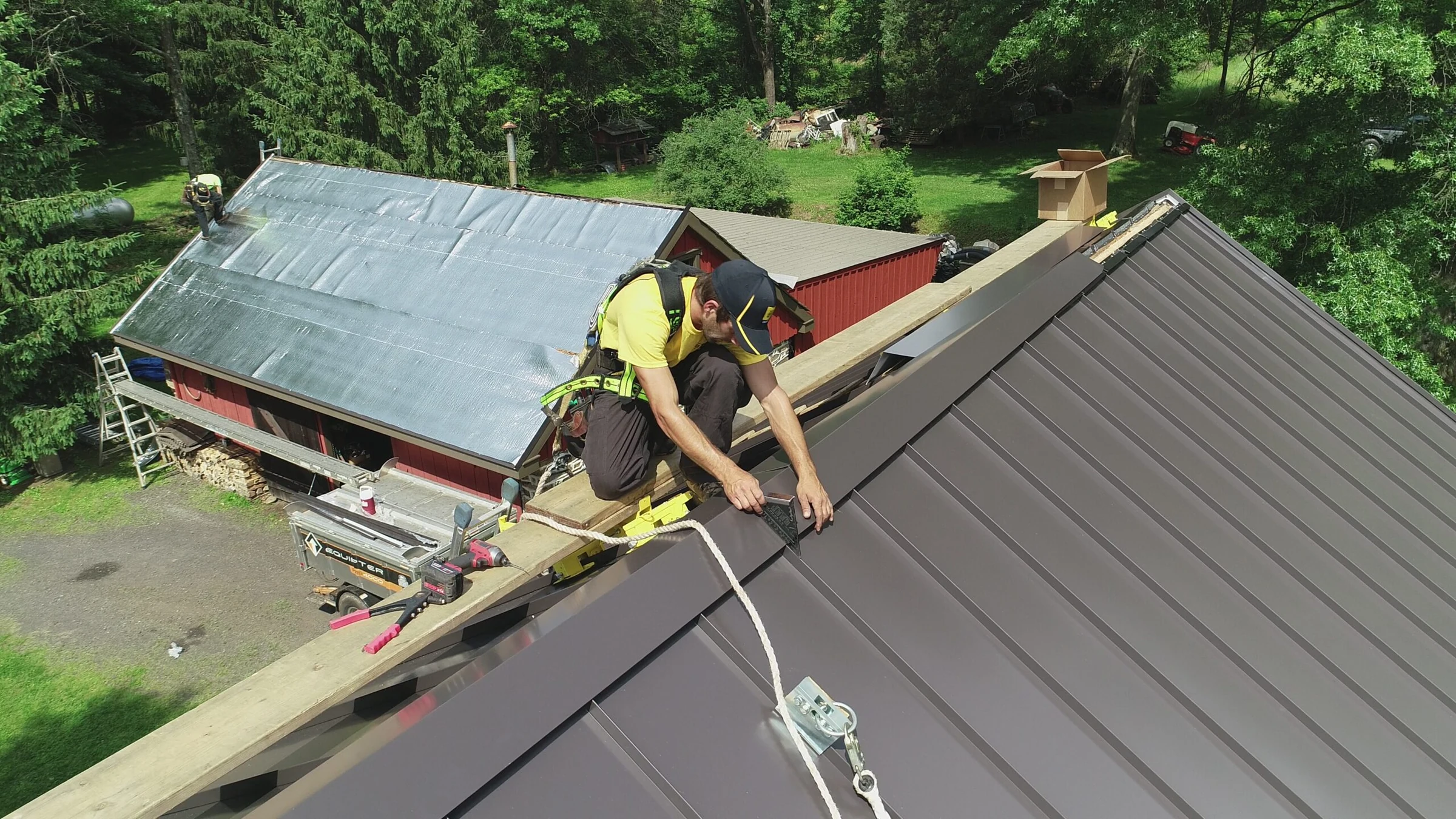
Standing Seam Metal Roofing for Fast Water Shed on Steeper Buildings
Where a building's roof geometry allows for real slope, standing seam metal is often the better long-term choice over a low-slope membrane in this climate. Concealed fasteners and mechanically or snap-locked seams give water almost nowhere to sit, which matters on a roof that sees rain for most of the year.
Why Concealed Fasteners Matter in Constant Rain
Standing seam panels interlock along raised vertical seams, with fasteners hidden underneath the seam rather than punched through the exposed panel face. That design means there's no exposed fastener penetration for water to work its way through over years of wetting and drying, which is the failure point that eventually catches up with exposed-fastener metal systems in a wet climate. The seam itself, whether mechanically double-locked or snap-fit, sheds water down the panel rather than creating a horizontal joint where water can pool and find a way in.
On a building with adequate slope, that combination of fast shed and no exposed penetrations means less ongoing maintenance than a comparable low-slope membrane roof, though it isn't maintenance-free.
Where We See Standing Seam Around the Valley
Agricultural and ag-adjacent buildings on the valley floor commonly use standing seam metal, both for cost efficiency at scale and because the steeper roof pitches typical of barn and processing-building construction suit metal well. We also see it on newer manufacturing and warehouse construction where the building was designed with enough slope from the start to make metal a viable option instead of low-slope membrane, and on institutional buildings looking for a longer-interval roof system with lower ongoing service needs.
Timber and wood-products facilities with older gable-roof construction are another common application, since many of those buildings were originally built with enough pitch for metal or asphalt-style roofing rather than flat membrane.
Ice Storms and Panel Movement
The valley doesn't see heavy snow loads most winters, but the occasional ice storm, usually a hard freeze arriving on top of already-saturated ground, puts real stress on a metal roof. Ice accumulation at eave lines and around snow guards or gutters can add weight and, more importantly, can find its way under improperly terminated panel edges if flashing details weren't done correctly at installation. We check eave and rake flashing closely on any post-storm inspection, since that's where ice-related intrusion typically shows up first.
Metal panels also expand and contract with temperature swings more than membrane roofing does, and standing seam systems are designed with that movement in mind through floating clip attachment. Fixed or improperly installed clips restrict that movement and eventually cause seam stress or panel oil-canning, which is something we look for on older installations we're asked to inspect.
Coatings and Recoating Metal Roofs
Older standing seam roofs with fading or chalking factory finish are good candidates for a reflective recoat rather than replacement, provided the panels themselves and the seams are still structurally sound. A recoat extends the finish life and improves reflectivity without the cost and disruption of a full panel replacement, which is often the more sensible path for a metal roof that's structurally fine but cosmetically and protectively aged.
What a Standing Seam Inspection Covers
- Seam integrity and clip movement at panel laps
- Eave, rake, and ridge flashing condition
- Panel fastener and clip attachment at penetrations
- Sealant condition at wall and curb transitions
- Finish condition, chalking, and coating wear
- Gutter and downspout capacity for the building's roof area
Standing Seam Versus Exposed-Fastener Metal
Standing seam costs more upfront than exposed-fastener R-panel metal, and that cost difference is a fair question for building owners on a budget. The trade-off is maintenance: exposed-fastener systems need periodic fastener and washer replacement as gaskets age and back out under thermal cycling, while standing seam's concealed attachment largely avoids that recurring maintenance item. For buildings planning to hold the roof for decades, standing seam usually pencils out favorably over the full ownership period.
We walk owners through both the install cost and the maintenance trajectory over a twenty-year horizon rather than just quoting the upfront number, since the fastener replacement cycle on an R-panel roof adds up over that span in a way that changes the comparison.
Common Standing Seam Questions
How does standing seam handle the valley's ice storms compared to low-slope membrane?
Its steep pitch and fast water shed mean less standing moisture exposure than a low-slope roof sees, but flashing details at eaves and terminations still need to be correct to prevent ice-driven intrusion during a hard freeze event.
Can an existing standing seam roof be recoated instead of replaced?
Often yes, if the panels and seams are structurally sound and the issue is finish fading or minor chalking rather than panel or seam failure.
Why does my metal roof make popping or oil-canning noises during temperature swings?
That's usually panel movement against clips that aren't floating properly, letting the panel expand and contract with restriction rather than freely, which we can often correct without full panel replacement.
Is standing seam a good option for a low-slope building?
Not usually. Standing seam depends on slope to shed water effectively along the seam lines. Buildings without adequate pitch generally do better with a membrane system designed for flat or near-flat drainage.
How often should standing seam roofs be inspected in this climate?
An annual inspection covers most buildings well, with an additional check after any significant ice storm or windstorm event to catch flashing or fastener issues before they become active leaks.