
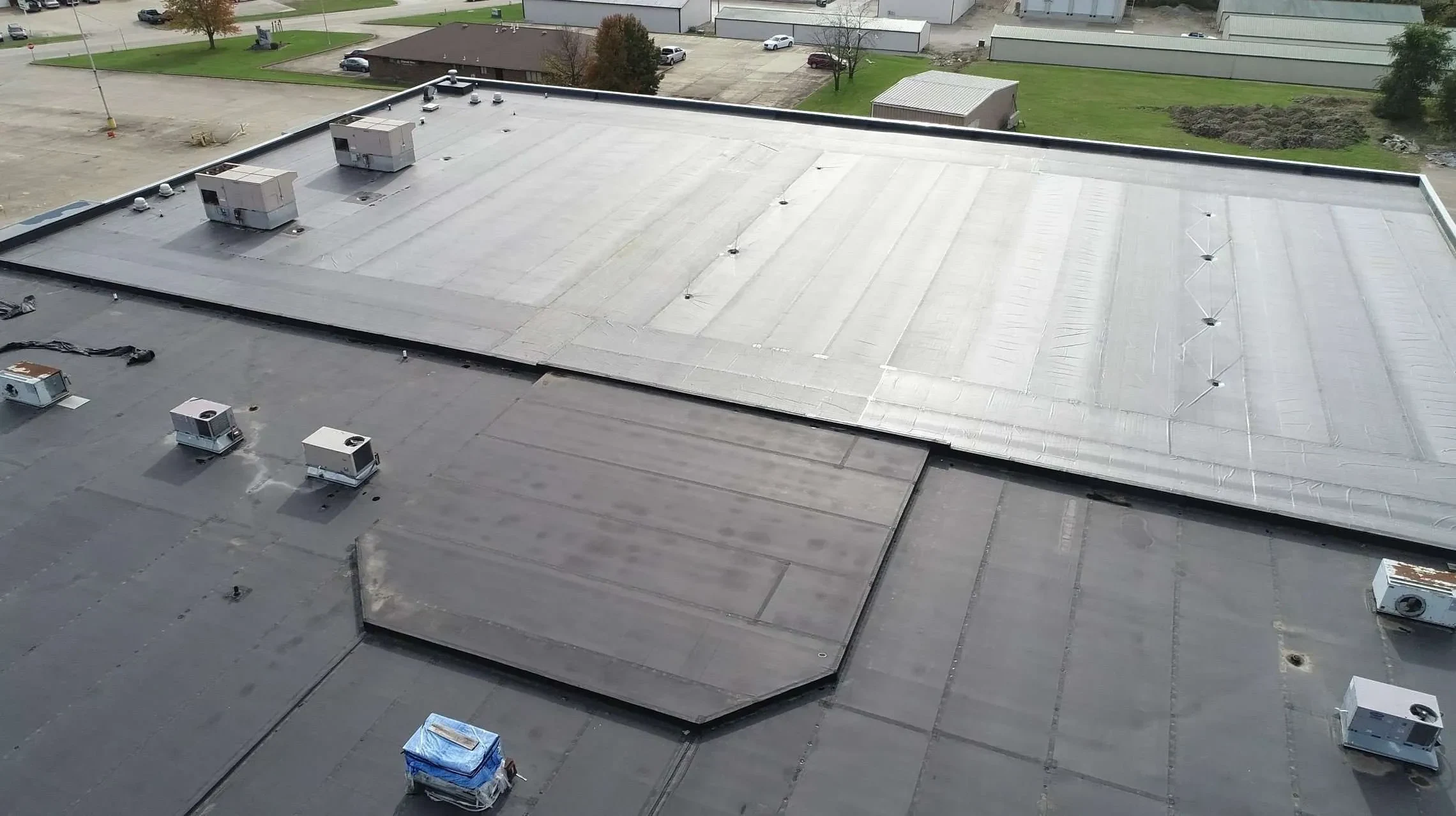
White EPDM for Roofs That Need Reflectivity and Rubber Flexibility
White EPDM combines the flexible, cold-tolerant rubber field of standard EPDM with a reflective surface layer, and we bring it up on buildings where cooling load or roof-surface temperature matters but the owner still wants EPDM's track record and simpler field detailing over TPO's heat-welded seams. It's a smaller share of what we install than black EPDM or TPO, but it fits specific situations well.
Why an Owner Chooses White Over Black EPDM
The reflective surface reduces membrane temperature swings, which matters most on buildings with significant rooftop HVAC load or occupied space directly under the roof deck, like some of the retail and office buildings along the Highway 99 corridor. Lower surface temperature also means less thermal expansion and contraction at seams over the life of the roof.
It costs more than black EPDM for the same base rubber field, and we tell owners that difference directly rather than assuming reflectivity is worth the premium on every building. On a lightly conditioned warehouse, the case for white over black is weaker.
Same Taped Seams, Same Weather Window
White EPDM uses the same taped or liquid-adhesive seam method as black EPDM, which means the same weather sensitivity during installation applies. We schedule seam work around forecast windows rather than the calendar, since the region's rain can arrive with little warning even in what's supposed to be a dry stretch.
Once cured, seam performance is comparable between black and white EPDM. The reflective coating on the field membrane doesn't extend the seam's tolerance for standing water, so drainage detailing gets the same attention regardless of color.
Keeping the Reflective Surface Clean
A reflective membrane loses some of its performance advantage when it's coated in moss, algae, and organic debris, which is a real consideration on roofs shaded by the mature tree canopy common near the university and older residential-adjacent commercial blocks. Dirty white membrane still functions as a roof, but it stops delivering the reflectivity the owner paid extra for.
We build periodic cleaning into the maintenance plan for white EPDM roofs specifically, since the visual and performance case for the membrane depends on keeping the surface reasonably clear of the organic growth this climate produces.
- Reflective surface reduces membrane and rooftop temperature swings
- Same taped or liquid-adhesive seam method as black EPDM
- Best value on buildings with real cooling-load or occupied-space concerns
- Requires periodic cleaning to keep reflectivity from being masked by moss
- Rubber field stays flexible through cold snaps and ice events
- Ponding at seams remains the primary long-term failure point
Drainage and Ponding Considerations
The same seam-vulnerability logic that applies to black EPDM applies here: standing water at a taped seam is the primary long-term risk, not general membrane wear. We evaluate drain count and slope on white EPDM specs with the same conservatism we apply to black EPDM.
On recover projects over older EPDM roofs where drainage was marginal to begin with, we'll flag whether additional drains or tapered insulation make sense before installing new membrane rather than repeating a known problem.
Cold Snaps and Ice Events
Like black EPDM, the white membrane's rubber field stays flexible through the Valley's occasional hard freezes better than thermoplastic sheet, which is a genuine advantage during ice storms. The reflective coating itself doesn't change that cold-weather behavior meaningfully.
We inspect flashings and drain strainers before the winter season on white EPDM roofs the same as any other system, since ice accumulation at parapets and curbs is a mechanical problem independent of membrane color.
Comparing White EPDM to Reflective TPO
Owners sometimes ask why they'd choose white EPDM over white TPO, since both offer a reflective surface. The answer usually comes down to seam preference and roof field simplicity: EPDM's rubber field handles a wider range of movement and cold flexibility, while TPO's welded seams hold up better under sustained standing water at the seam itself.
Neither is universally better. We look at the roof's penetration count, drainage history, and expected traffic before recommending one reflective membrane over the other, and we'll say directly when TPO is the stronger fit for a given building instead of defaulting to EPDM. Either way, maintaining the reflectivity that justifies white EPDM's premium over black requires periodic cleaning, and we factor that ongoing cost into the conversation before an owner commits. A roof that never gets cleaned loses much of the performance advantage within a few wet seasons under tree canopy.
Common Questions on White EPDM Locally
Is white EPDM worth the extra cost over black in this climate?
It depends on the building. On heavily conditioned space or roofs with occupied areas directly below, the reduced temperature swing has real value. On a lightly used warehouse, black EPDM is usually the more practical choice.
Does moss buildup cancel out the reflective benefit?
Over time, yes, if the roof isn't cleaned. A moss-covered white membrane still sheds water but loses much of its reflectivity, which is why we build cleaning into the maintenance plan.
Are white EPDM seams weaker than TPO seams in the rain?
Both EPDM colors use taped or adhesive seams rather than heat welds, which makes them more sensitive to standing water at the seam edge over years than a welded TPO or PVC seam.
Does white EPDM handle ice storms differently than black?
No meaningful difference. Both stay flexible in cold better than thermoplastic membranes; the reflective coating doesn't change that behavior.
Can white EPDM go over an old black EPDM roof?
Sometimes, as part of a recover, if the existing membrane and insulation are dry and sound. We inspect the substrate and drainage first before recommending that path.