
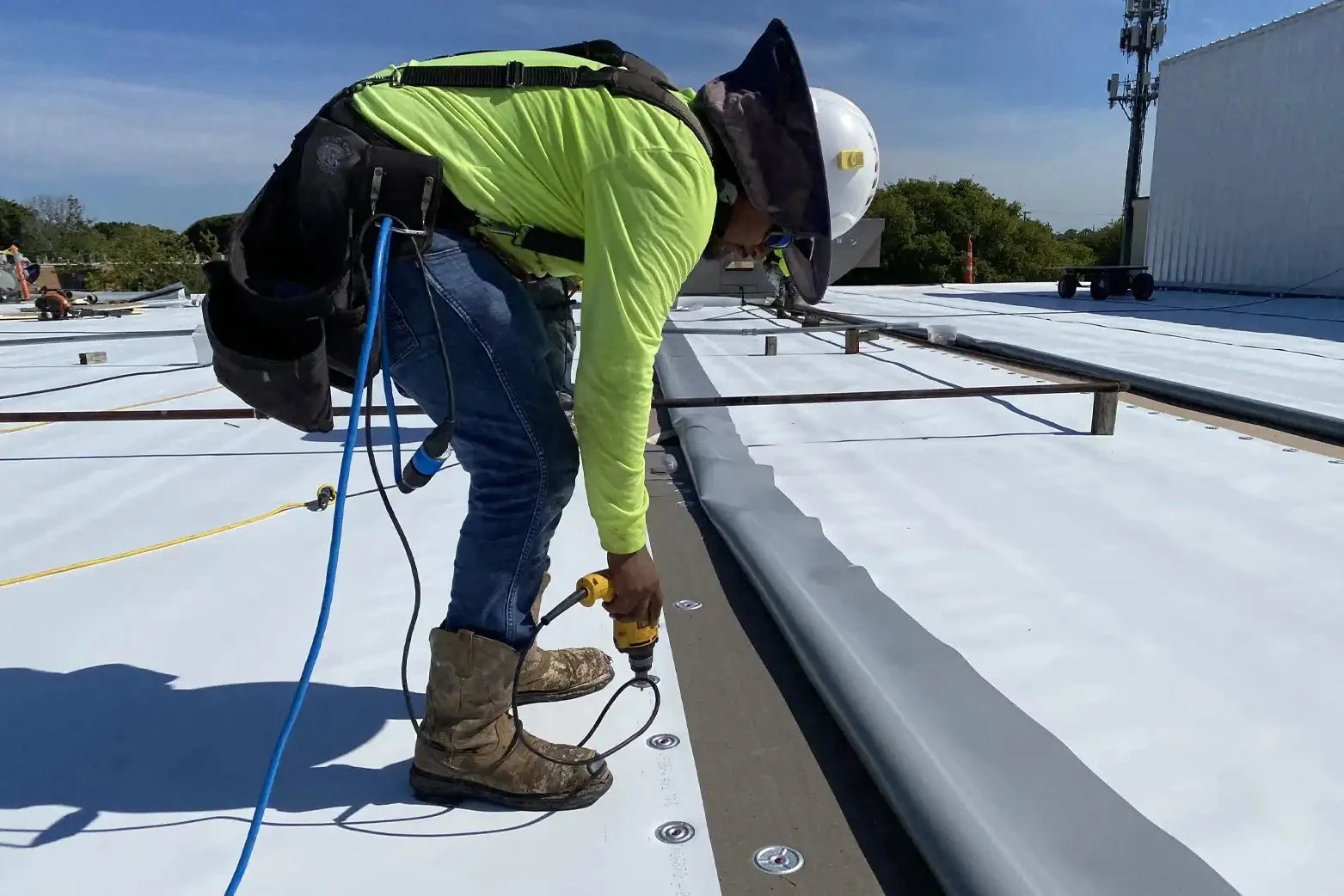
Why We Spec 80-Mil TPO on Heavier-Traffic Roofs
Eighty-mil TPO carries thicker reinforcement scrim and more membrane material over the weld than the standard 60-mil sheet, and we reach for it when a roof has to survive more than normal foot traffic or when an owner wants the longest realistic service life out of a single-ply system. It costs more per square, and we tell owners that up front rather than upselling it as a default.
Where the Extra Thickness Actually Pays Off
Manufacturing buildings around west Eugene and Highway 99, where technicians are on the roof servicing rooftop units or exhaust fans on a regular basis, wear through thinner membrane faster than an office building with a single annual service visit. Eighty-mil sheet gives more margin against scuffing, punctures from dropped tools, and the general abuse that comes with a roof doubling as a mechanical work platform.
We also lean toward 80-mil on roofs serving wood-products and light manufacturing operations, where sawdust, resin residue, and periodic debris from adjacent operations settle on the membrane. That combination of foot traffic and debris load wears a thinner sheet down faster than the manufacturer's published life expectancy would suggest.
Seam Integrity Under Sustained Wet Conditions
The heat-weld process is the same regardless of sheet thickness, but a thicker membrane holds its shape better during welding and resists thin spots at the seam edge. On a roof that stays wet for stretches of eight or nine months a year, seam consistency matters more than almost anything else we control during installation.
We run a seam probe across every weld during installation, not a spot sample, because a single weak spot in an otherwise good seam is where water finds its way in during a heavy December rain. Thicker membrane gives the welding crew slightly more forgiveness for temperature swings during installation, which matters on the cooler, damper days that make up a good chunk of the regional roofing season.
- Thicker reinforcement scrim resists puncture from tools and rooftop traffic
- Better tolerance for pressure-washing to remove established moss
- More consistent heat-welded seams under cooler, damper installation conditions
- Longer realistic service life on mechanically busy roofs
- Higher material cost than 60-mil, best justified by traffic or debris load
- Not a substitute for correct drainage on a documented ponding roof
Ponding Tolerance and Long-Term Drainage
No membrane thickness fixes bad slope, and 80-mil TPO is not a substitute for tapered insulation or additional drains on a roof with a documented low spot. What the thicker sheet does offer is more resistance to the slow degradation that comes from a membrane sitting under a few inches of water for days after a heavy Pacific front moves through.
On corporate and institutional buildings where a full drainage retrofit isn't in this year's budget, we sometimes recommend 80-mil as a stopgap that buys the owner more years before the ponding condition forces the issue. We're upfront that it's a mitigation, not a permanent fix.
Moss, Debris, and Long-Term Membrane Cleanliness
Thicker membrane doesn't resist moss growth any better than thinner sheet; surface texture and shading are what drive organic growth, not scrim weight. But a thicker membrane tolerates the pressure-washing and mechanical cleaning needed to remove established moss without the surface degradation you'd see on a thinner sheet after repeated cleanings.
For roofs near mature tree lines, common on older commercial parcels close to campus and along the river corridors, we build periodic cleaning into the maintenance conversation from day one rather than waiting until moss has worked into the seams.
Cold-Weather and Ice-Storm Considerations
Willamette Valley ice storms are infrequent but not rare, and when they hit, thicker membrane holds up marginally better against impact from ice-laden branches or accumulated weight at parapets. It's a secondary benefit, not the primary reason to choose 80-mil, but it's part of the full picture for owners weighing the cost difference.
We schedule pre-winter inspections on 80-mil roofs the same as any other system, checking flashing terminations and drain strainers before the first hard freeze rather than after.
Comparing Installed Cost Against Service Life
Owners weighing 80-mil against 60-mil usually want a straight answer on payback, and we give one: the price premium buys thicker scrim, better puncture resistance, and typically a longer manufacturer warranty term, but it only pays off if the roof actually sees the traffic or debris load that wears thinner membrane down early. On a roof with light foot traffic and no unusual debris, the extra cost doesn't return much.
We run this comparison with real numbers from the specific building rather than a blanket rule, factoring in how many rooftop units need regular service, whether the building sits near wood-products operations, and how long the owner plans to hold the property before the roof decision pays for itself.
Common Questions on 80-Mil TPO for Local Roofs
Is 80-mil TPO worth the extra cost over 60-mil?
On roofs with heavy mechanical traffic, wood-products debris, or a long ownership horizon, usually yes. On a low-traffic office roof with good drainage, 60-mil often performs just as well for less money.
Does thicker membrane stop ponding water?
No. Ponding is a slope and drainage problem. Thicker membrane resists degradation from occasional standing water better, but it doesn't correct a low spot on its own.
How does 80-mil TPO handle moss compared to 60-mil?
Both resist moss similarly since surface texture drives growth, not thickness. The thicker sheet tolerates more aggressive mechanical cleaning over the roof's life without wearing thin.
Do welded seams on 80-mil TPO need special inspection?
We probe every seam during installation regardless of sheet thickness, then again during the first wet season, since that's when a marginal weld typically shows itself.
Is 80-mil TPO a good fit for wood-products or manufacturing buildings?
Often yes. Resin residue, sawdust, and frequent rooftop unit servicing wear thinner membrane faster than published life expectancy suggests, and the extra scrim earns its cost there.