
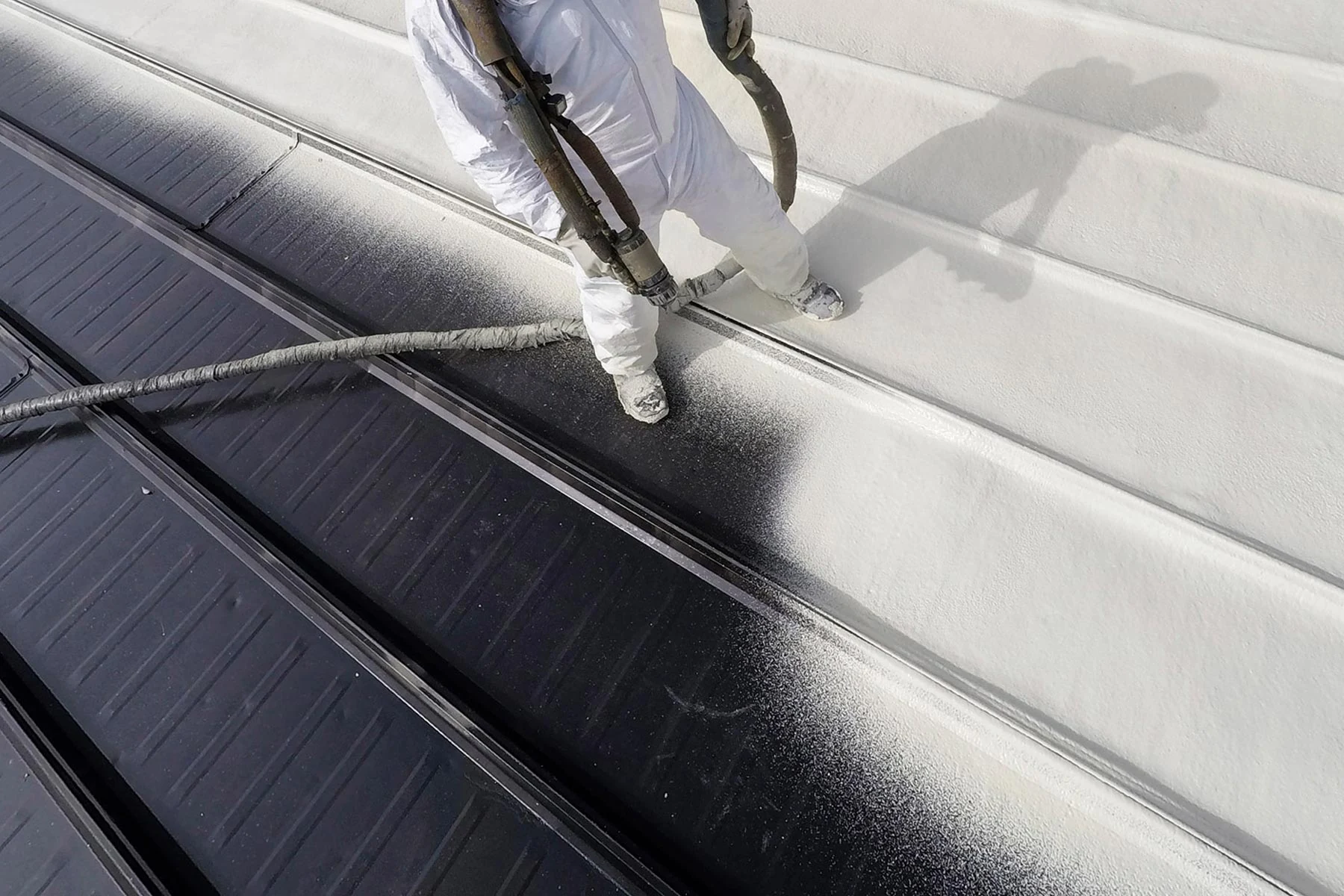
Spray Foam Roofing and Self-Draining Slope Correction
Spray polyurethane foam is applied wet, expands, and cures into a continuous rigid layer that combines insulation and roof substrate in one application, then gets topped with a protective coating. Its biggest practical advantage for Eugene's flat commercial roofs is that installers can build slope and crickets directly into the foam, correcting ponding conditions that a membrane-only system can't fix on its own.
Building Drainage Directly Into the Roof
Because foam is sprayed and cured in place rather than laid as a flat sheet, we can taper it to create positive drainage toward existing drains or add crickets around curbs and equipment that have historically held water. On older flat roofs around Eugene with a known low spot and no room in the budget for a separate tapered insulation package, foam solves both the insulation and the slope problem in one pass.
This is the main reason we bring foam up on buildings with a documented, stubborn ponding history rather than defaulting to a membrane recover that would just sit on top of the same slope problem.
continuous Field, But the Coating Is the Roof
The cured foam itself isn't UV-stable or weather-resistant on its own; the elastomeric coating applied over it is what actually protects the roof and needs to be maintained on a recoat cycle, typically every several years depending on exposure and foot traffic. We're upfront with owners that foam roofing isn't a set-it-and-forget-it system; it needs a maintenance relationship over its life.
In a climate with nine months of rain most years, we watch coating thickness and wear closely during maintenance visits, since a thinning coating exposes the foam underneath to UV and moisture damage faster than most owners expect.
- continuous field with no laps or seams to fail
- Can be tapered during application to correct existing ponding
- Requires an elastomeric coating and a recurring recoat maintenance cycle
- Needs a dry substrate and dry weather window during installation
- Best scheduled during the region's more reliable summer dry stretch
- Coating wear can be masked by debris on textured surfaces
Moss and Debris on a Textured Surface
Depending on the coating's surface texture, foam roofs can hold onto organic debris similarly to a granulated cap sheet, and roofs under mature tree canopy near campus and older commercial districts need the same debris-clearing attention we'd recommend on any low-slope system. Standing debris on foam roofing also masks coating wear from view during routine inspection.
We clear debris and inspect coating condition together on foam roofs, since the two issues compound each other if left unaddressed.
Installation Weather Requirements
Spray foam application needs dry substrate and a dry weather window, more strictly than most other systems on this list, since moisture in the substrate or during application compromises the foam's cell structure. This is the single biggest scheduling constraint we deal with on foam projects in a climate where extended dry stretches aren't guaranteed.
We plan foam installations around the region's more reliable dry windows, typically summer months, rather than attempting it during the shoulder seasons when rain can move in with little warning.
Cold Snaps and Long-Term Coating Performance
Cured foam and its elastomeric coating handle the Valley's occasional ice storms reasonably well structurally, since the continuous field has no laps or seams to stress under ice load. The coating's flexibility at low temperatures matters more than the foam's own cold tolerance in these events.
We include foam roofs in the same pre-winter inspection cycle as membrane systems, checking coating integrity at parapets, curbs, and drain areas where ice tends to concentrate.
Where Foam Fits Against Membrane Recover Options
Foam competes most directly with a tapered-insulation membrane recover on roofs with a genuine drainage problem, and the choice usually comes down to how severe and widespread the ponding condition is. A single stubborn low spot might be solved more economically with targeted tapered insulation under new membrane, while a roof with multiple ponding areas across the field often favors foam's ability to build slope everywhere in one pass.
We walk owners through both paths with real cost and maintenance expectations for each rather than defaulting to foam because it solves drainage, since the ongoing recoat commitment is a real factor in that decision.
Questions on Spray Foam Roofing Locally
Can spray foam actually fix a roof with standing water?
Yes, foam is sprayed and cured in place, so it can be tapered to build positive drainage or crickets around problem areas in a way a flat membrane sheet can't.
Does foam roofing need more maintenance than membrane systems?
It needs a recurring recoat cycle to protect the foam from UV and moisture, since the foam itself isn't weather-stable without its coating. We treat that maintenance as part of owning a foam roof, not optional.
What time of year is best for foam roof installation here?
Summer, when a longer dry stretch is more reliable. Application needs dry substrate and dry weather, which is harder to guarantee during the shoulder seasons.
How does foam roofing hold up during an ice storm?
The continuous field has no seams to stress under ice load, and it performs reasonably well structurally. The coating's cold flexibility matters more than the foam's own tolerance.
Does moss grow on spray foam roofs?
It can, depending on surface texture, similar to a granulated membrane. We clear debris and check coating condition together during maintenance visits.