
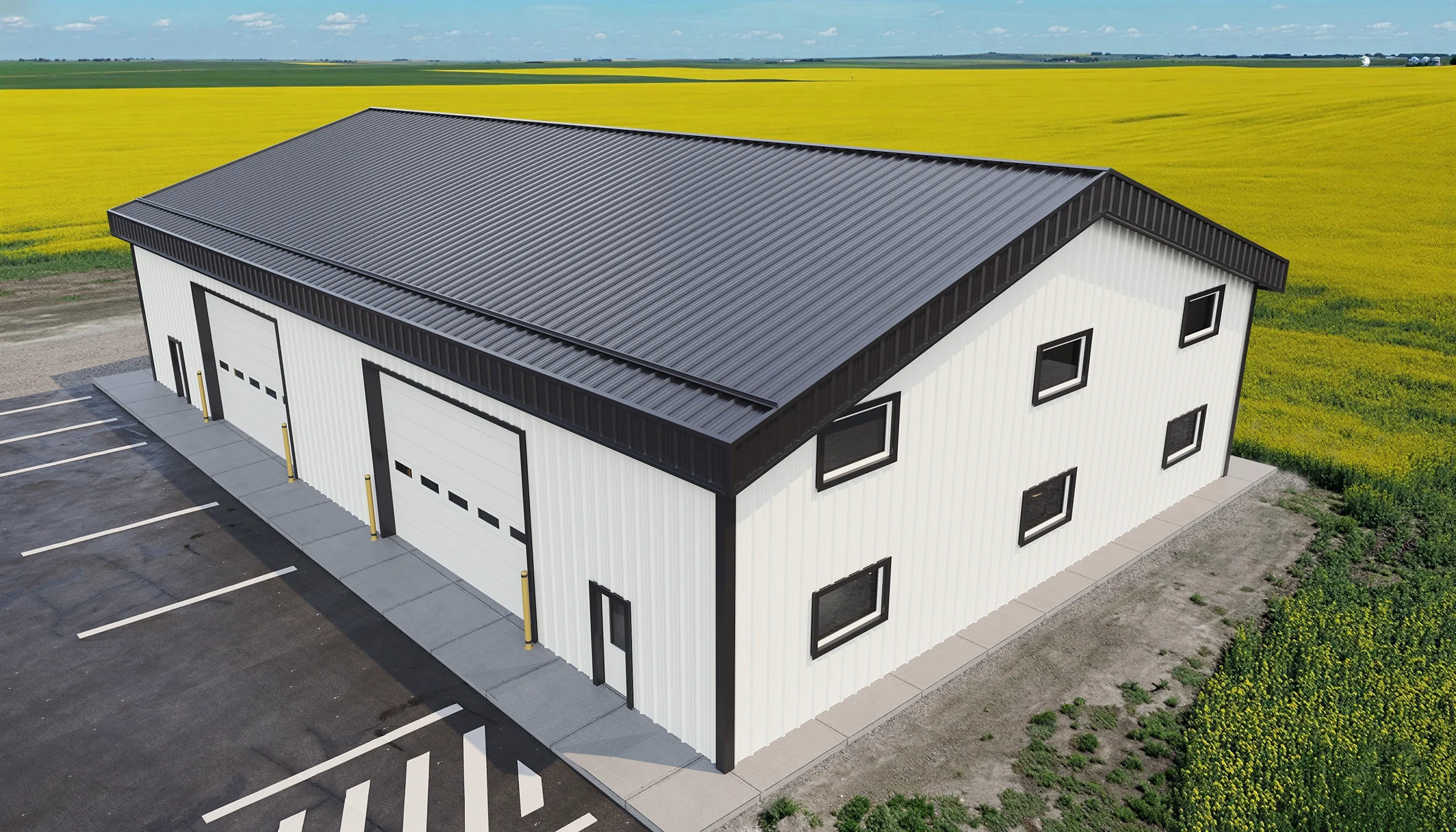
Exposed-Fastener R-Panel Roofing for Industrial and Ag Buildings
R-panel metal roofing is common on agricultural, light industrial, and warehouse buildings around the valley where cost efficiency matters more than the concealed-fastener detailing of standing seam. It's a solid system when the fasteners get proper attention, and most of the leak calls we get on R-panel roofs trace back to gasket and fastener wear rather than the panels themselves.
How Exposed Fasteners Age in This Climate
R-panel metal attaches through the panel face with screws fitted with neoprene washers that create the actual weather seal. Those washers are the wear item on this system, and constant wetting and drying cycles through the valley's long rainy season break down neoprene faster than it would age in a drier climate. As the washer compresses and cracks, water finds a path along the screw shaft, and a roof that was watertight for years can start developing scattered leaks as washers reach the end of their service life roughly at the same time, since they were all installed together.
Thermal cycling adds to the problem. Metal panels expand and contract with temperature swings, and that movement works against fastener holding power over time, gradually backing screws out just enough to compromise the washer seal even before the neoprene itself has failed.
Where This System Shows Up Around the Valley
Ag-adjacent buildings on the valley floor, from processing and storage structures to equipment barns, use R-panel extensively because it covers large roof areas economically. Light industrial and warehouse buildings, particularly older construction west of Eugene and along the Highway 99 corridor, also carry a lot of R-panel roofing from a cost-driven era of construction. We see it on smaller manufacturing buildings tied to the area's wood-products and metal fabrication base as well, often on additions built onto an original structure.
It's a less common choice for new institutional or higher-visibility commercial construction now, where standing seam's cleaner appearance and lower long-term maintenance profile tend to win out, but for cost-focused industrial and ag buildings, R-panel remains a practical option.
Fastener Refresh Programs
The most effective maintenance move on an aging R-panel roof isn't waiting for individual leaks to appear and chasing them one at a time. It's a systematic fastener refresh, replacing washers and re-torquing or replacing screws across the field on a planned interval before widespread failure sets in. This is particularly worth doing on roofs approaching fifteen to twenty years of age, where washer degradation tends to cluster because the original fasteners were all installed at the same time and are aging together.
A refresh program costs less than chasing scattered leaks reactively over several wet seasons and extends the roof's usable life meaningfully without a full panel replacement.
Rust and Fastener Corrosion
Beyond washer failure, we watch for corrosion at fastener heads and cut panel edges, particularly on older galvanized panels that have lost coating integrity over decades of exposure. Rust streaking down a panel face from a corroding fastener is a visible early warning sign, and addressing it early, before the corrosion compromises the panel itself, is far cheaper than dealing with panel replacement later.
R-Panel Inspection and Maintenance Checklist
- Fastener and washer condition survey across the field
- Rust and corrosion check at fastener heads and panel edges
- Panel lap and closure strip condition at ridges and eaves
- Flashing inspection at wall transitions and penetrations
- Gutter and downspout function for the roof's drainage load
- Panel oil-canning or movement check from thermal cycling
R-Panel Versus Standing Seam: Making the Call
R-panel costs less upfront and covers large areas economically, which is why it remains common on ag and industrial buildings where budget drives the decision. Standing seam costs more but avoids the recurring fastener maintenance that R-panel requires. For a building owner planning to hold the property long-term, that maintenance difference is worth weighing against the upfront savings, and we lay out both sides rather than defaulting to whichever system is already on the roof.
For a building already on R-panel with a solid frame and deck, a fastener refresh program is usually the more practical near-term move than switching systems entirely, since a full re-roof to standing seam is a significant cost jump, and that jump only makes sense once the panels themselves have reached the end of their service life.
Common R-Panel Questions
My roof has scattered small leaks in different spots. Is that a panel problem?
Usually not. Scattered leaks across an older R-panel roof almost always point to failing fastener washers reaching end of life around the same time, not a problem with the panels themselves.
Is it cheaper to replace all the fasteners or wait until individual ones fail?
A planned fastener refresh across the field is almost always cheaper over time than responding to leaks one at a time, since each individual service call carries its own cost and the underlying washer degradation is happening roof-wide anyway.
How long do fastener washers typically last in this climate?
It varies by installation quality and sun exposure, but the valley's long wet season tends to shorten washer life compared to drier climates, which is why we recommend proactive inspection rather than waiting for leaks to appear.
Can rust at fastener points be treated instead of replacing the whole panel?
Often yes, if caught before the corrosion compromises the panel material itself. Fastener replacement and localized treatment usually resolves it without panel-level repair.
Is R-panel a good choice for a new roof, or should I go with standing seam?
It depends on budget and how long you plan to hold the building. R-panel is more economical upfront; standing seam costs more but needs less recurring fastener maintenance over a long ownership period.